Hungarian Goulash is a heartwarming stew rooted deeply in Central European tradition, especially in Hungary where it has been a staple for centuries. Originally prepared by herdsmen in the Great Hungarian Plains, goulash (or gulyás) began as a simple, rustic dish made over open fire. Today, it stands as a symbol of Hungarian culinary heritage, renowned for its rich paprika-spiced broth, fork-tender beef, and soul-satisfying depth of flavor.
This stew isn’t just about warming up on a chilly night—it’s about the experience of slow-simmered goodness, the kind that perfumes your kitchen with comfort and tradition. Authentic Hungarian Goulash is more than just beef stew. It strikes a beautiful balance between savory, slightly sweet, and mildly spicy—thanks to the generous use of Hungarian sweet paprika, caraway seeds, and slow-cooked aromatics.
Whether you’re looking to explore traditional European cuisine or simply crave a cozy, hearty dinner, this goulash will deliver.
Ingredients Overview
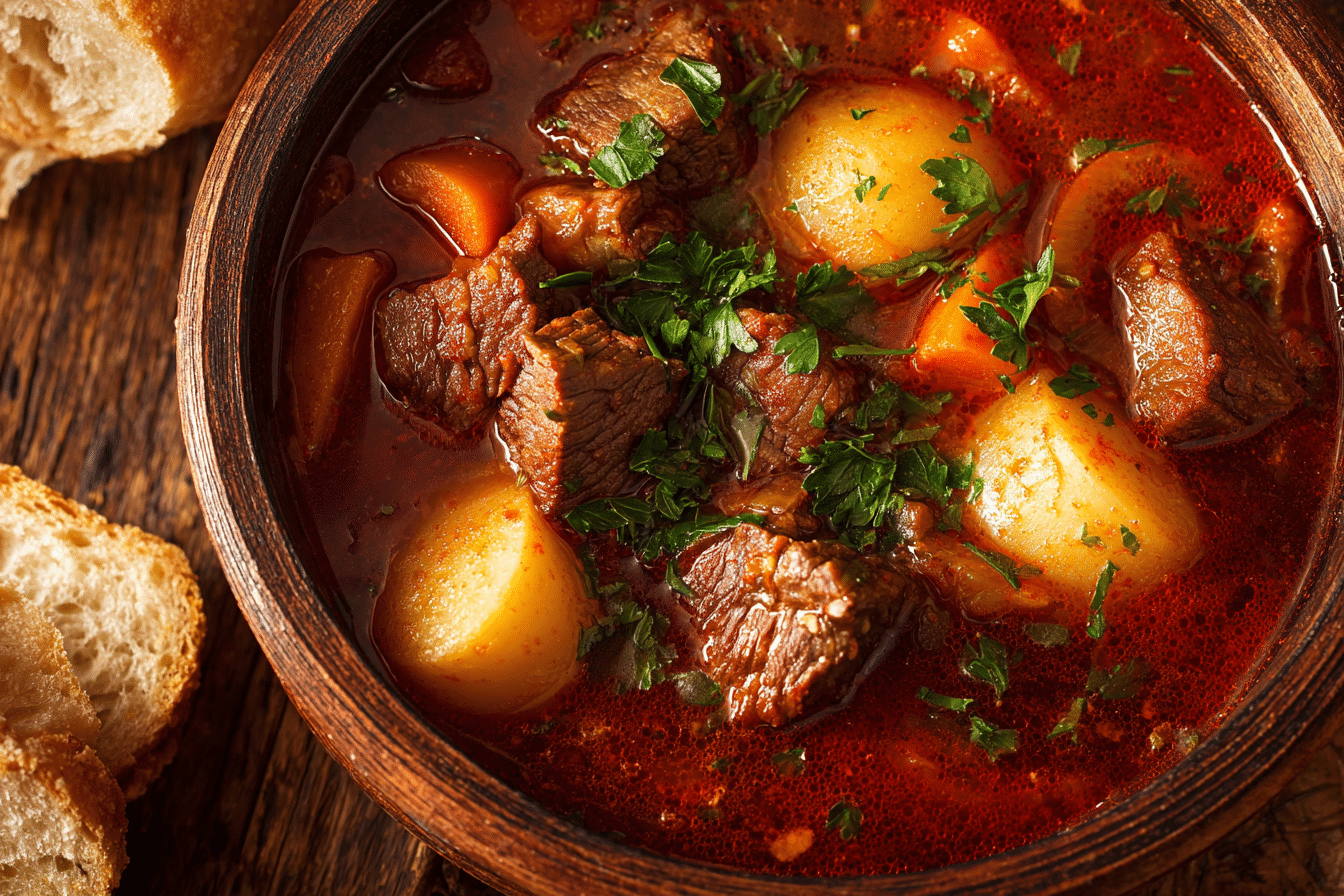
To achieve that classic Hungarian depth of flavor, each ingredient in this dish serves a purpose. Here’s a closer look at what goes into a traditional goulash and how you can customize it based on what’s available:
Beef Chuck (or Stewing Beef)
This cut is ideal for long, slow cooking. It becomes meltingly tender as it simmers, absorbing all the spices and broth. Avoid lean cuts like sirloin, which tend to dry out.
Alternative: Lamb shoulder or pork shoulder can be used for regional variants.
Onions
Equal in weight to the beef (a key to authenticity), onions create the flavorful base when sautéed until golden and soft. They naturally thicken the stew.
Tip: Use yellow onions for the best sweetness.
Hungarian Sweet Paprika
This is the soul of the dish. Rich, sweet, and slightly smoky, this paprika defines the flavor profile. Hungarian brands like Szeged or Kalocsa are preferred.
Important: Do not substitute with hot paprika or generic chili powder.
Garlic
A few cloves add subtle depth without overpowering the dish. Minced and added with the onions for full aromatic release.
Caraway Seeds
Traditional and crucial, these seeds offer a nutty, slightly peppery background that enhances the stew’s character.
Optional twist: Lightly crush the seeds to intensify their aroma.
Bell Pepper
Common in modern versions. Red bell peppers lend a mild sweetness and blend well with paprika.
Note: While not found in the earliest versions, peppers are now a staple in most Hungarian households.
Tomatoes or Tomato Paste
Used sparingly to build body and richness. Adds umami without turning it into a tomato-based stew.
Variation: Fresh diced tomatoes or 1 tablespoon of paste for a deeper base.
Potatoes
Not always traditional, but commonly included in home-style versions. They soak up the broth and make the dish more filling.
Tip: Use waxy potatoes (Yukon Gold) to avoid mushiness.
Beef Stock or Water
Water is often used in traditional recipes, but using beef broth gives an extra layer of savory flavor.
Low-sodium stock is best to control the saltiness.
Bay Leaf, Salt & Pepper
Bay adds a subtle herbal depth. Always season in stages as the stew reduces.
Step-by-Step Instructions
Making Hungarian goulash is a slow, rewarding process. Each stage builds flavor, from the sautéed onions to the long simmering that turns tough beef into tender bites.
1. Sauté the Onions
Start with a heavy-bottomed pot or Dutch oven. Heat a few tablespoons of oil and sauté finely chopped onions over medium heat until soft and golden—this can take up to 10 minutes. Patience is key, as these onions form the flavorful base.
2. Add Garlic and Caraway Seeds
Once the onions are caramelized, stir in the minced garlic and caraway seeds. Toast gently for 30–60 seconds until fragrant.
3. Stir in Paprika (Off Heat)
This is critical: remove the pot from the heat before adding the sweet Hungarian paprika. Stir quickly to coat the onions, avoiding burning the spice (which can make it bitter).
4. Brown the Beef
Add beef cubes, returning the pot to the heat. Stir frequently until the meat is lightly browned but not fully seared. The goal is to coat the meat in the paprika-onion mixture.
5. Add Tomatoes and Bell Pepper
Stir in chopped tomatoes (or paste) and diced bell pepper. Let them soften for a few minutes, releasing moisture and integrating with the base.
6. Pour in Liquid and Simmer
Add enough beef stock or water to just cover the meat. Toss in a bay leaf and a pinch of salt. Bring to a gentle boil, then reduce to low, cover, and simmer for 1.5 to 2 hours, stirring occasionally.
7. Add Potatoes
If using potatoes, add them in the last 30–40 minutes of cooking. Continue simmering uncovered to reduce and concentrate the flavors. The stew should be thick and spoon-coating.
8. Taste and Adjust
Before serving, season with salt and pepper to taste. The flavor should be rich, deeply savory, and balanced—not overly spicy or acidic.
Tips, Variations & Substitutions
Expert Tips
-
Paprika Freshness: Use paprika that’s less than 6 months old. It loses potency quickly.
-
Do Not Rush the Onions: They are the key to deep flavor. Undercooked onions = flat stew.
-
Simmer Gently: A rolling boil will toughen the beef.
Regional Variations
-
Csipetke Dumplings: Some Hungarian versions include these small, pinched egg dumplings.
-
Without Potatoes: In pure traditional recipes, potatoes are omitted and served on the side.
Dietary Substitutions
-
Gluten-Free: This stew is naturally gluten-free.
-
Low-Carb: Skip the potatoes and serve over cauliflower mash.
-
Vegan Version: Swap beef for mushrooms and chickpeas. Use vegetable broth and increase paprika for flavor.
Serving Ideas & Occasions
Hungarian Goulash shines as a cold-weather favorite, ideal for Sunday family dinners or holiday gatherings. The hearty, paprika-infused broth pairs beautifully with rustic sides like:
-
Crusty country bread or rye slices
-
Egg noodles (nokedli or spaetzle)
-
Pickled cucumbers or cabbage to balance richness
For drinks, try a glass of full-bodied red wine (Egri Bikavér is a traditional Hungarian choice) or a dark beer to complement the deep flavors.
It’s also excellent for meal prep—this stew tastes even better the next day after the flavors deepen overnight in the fridge.
Nutritional & Health Notes
Hungarian Goulash offers a well-rounded balance of protein, fiber, and slow-digesting carbohydrates. Beef provides iron, B vitamins, and essential amino acids, while onions, peppers, and tomatoes bring antioxidants and subtle sweetness.
For lighter fare:
-
Trim visible fat from the beef
-
Use leaner cuts (but cook longer)
-
Serve with steamed vegetables instead of potatoes or bread
A typical serving (~1½ cups) clocks in around 350–450 calories, depending on meat and added starches. Portion control is easy, as the dish is filling and rich.
FAQs
Q1: What makes Hungarian Goulash different from other beef stews?
A1: Hungarian Goulash relies heavily on sweet paprika, a spice that gives it a distinctive flavor and color. Unlike American or French-style stews, it doesn’t use flour for thickening. Instead, it’s built from slowly cooked onions and a long-simmered broth, creating a naturally rich consistency.
Q2: Can I make Hungarian Goulash in a slow cooker?
A2: Yes. Sauté onions, garlic, and paprika on the stovetop, then transfer to a slow cooker with the beef and remaining ingredients. Cook on low for 8 hours or high for 4–5 hours. Add potatoes halfway through if using.
Q3: Is Hungarian Goulash spicy?
A3: Traditional Hungarian goulash is not inherently spicy. It uses sweet paprika, which has more of a mild, smoky warmth. You can add hot paprika or a pinch of cayenne for extra heat if desired.
Q4: Can I freeze Hungarian Goulash?
A4: Absolutely. Let the stew cool completely, then store in airtight containers or freezer bags for up to 3 months. Thaw overnight in the fridge and reheat gently on the stove.
Q5: What type of paprika should I use?
A5: Use Hungarian sweet paprika, not Spanish or smoked varieties. The authentic flavor relies on this specific type. Look for brands like Szeged or Kalocsa.
Q6: Why are so many onions used?
A6: Onions are crucial—they melt into the broth and help thicken the stew without flour. Their natural sweetness also balances the paprika’s earthiness.
Q7: Can I make it vegetarian?
A7: Yes. Replace beef with hearty mushrooms, lentils, or chickpeas. Use vegetable stock and consider adding smoked paprika for depth. Simmer until vegetables are tender and the broth is rich.
A traditional Hungarian beef stew, slow-simmered with onions, sweet paprika, and tender beef. Rich, hearty, and deeply comforting.
- Prep Time: 10 minutes
- Cook Time: 20 minutes
- Total Time: 30minutes
- Yield: 4–6 servings 1x
Ingredients
-
2 lbs beef chuck, cut into 1-inch cubes
-
2 large yellow onions, finely chopped
-
2 tbsp Hungarian sweet paprika
-
2 cloves garlic, minced
-
1 tsp caraway seeds
-
1 red bell pepper, diced
-
1 medium tomato, chopped or 1 tbsp tomato paste
-
3 cups beef stock or water
-
2 medium waxy potatoes, peeled and cubed (optional)
-
1 bay leaf
-
Salt and black pepper to taste
-
2 tbsp vegetable oil
Instructions
-
In a Dutch oven, heat oil over medium heat. Add onions and cook until golden and soft (10–12 minutes).
-
Add garlic and caraway seeds, stir for 1 minute.
-
Remove pot from heat. Stir in paprika until onions are coated.
-
Return to heat, add beef cubes, and stir until lightly browned.
-
Add tomato and bell pepper. Cook for 3–5 minutes.
-
Pour in stock, add bay leaf, and season with salt. Simmer covered on low for 1.5–2 hours.
-
If using, add potatoes in the last 30–40 minutes. Simmer uncovered to reduce liquid.
-
Taste and adjust seasoning before serving.