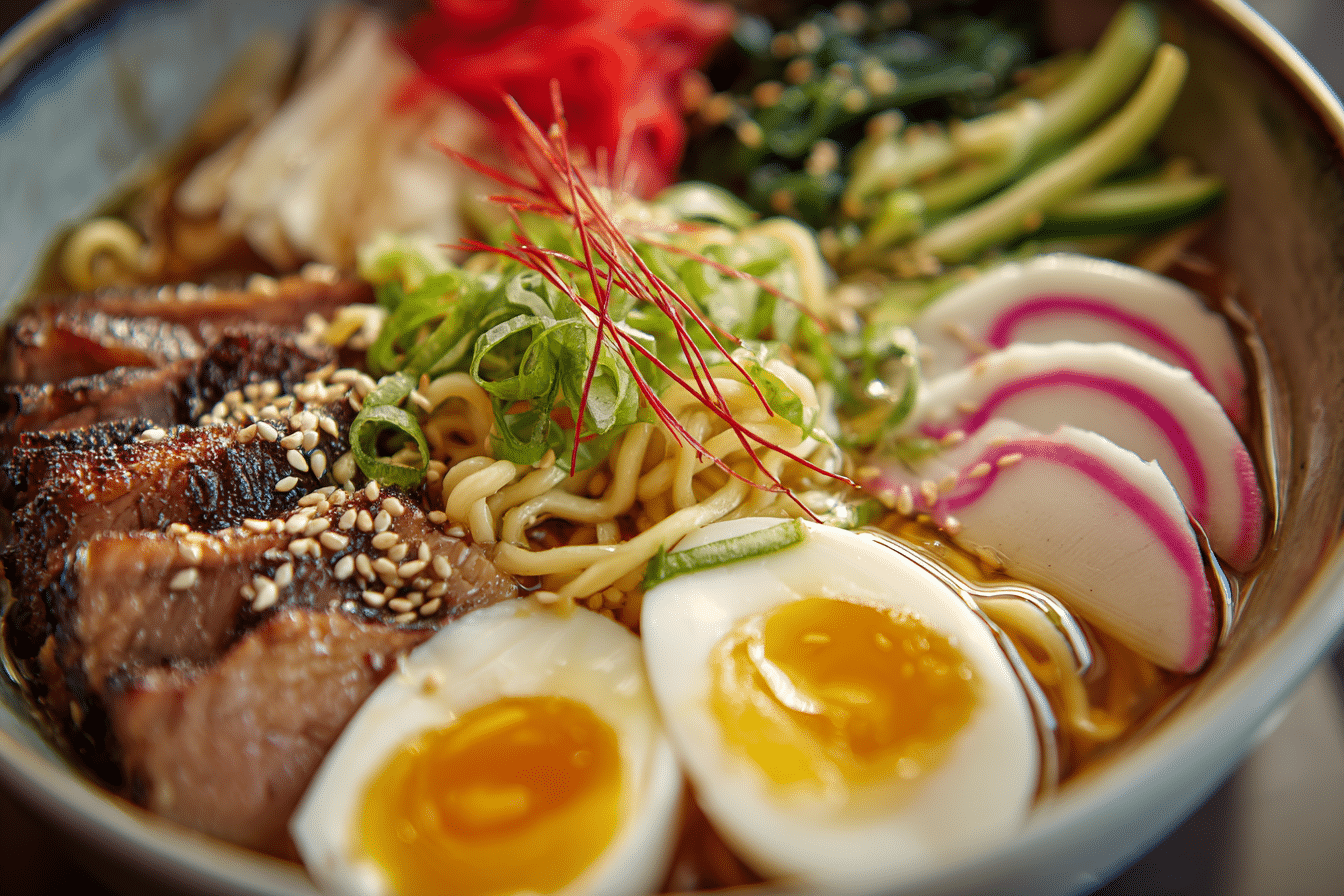
There’s something incredibly satisfying about a steaming bowl of Homemade Ramen—deeply flavored broth, tender noodles, and a medley of toppings that invite customization. While instant ramen has its place, crafting ramen from scratch transforms it into a truly soul-warming meal.
Originating in Japan, ramen is a cultural icon, with regional variations across the country—from the creamy tonkotsu broths of Kyushu to the shoyu-based bowls in Tokyo. This recipe focuses on a rich, umami-packed broth, fresh or store-bought noodles, and toppings like jammy soft-boiled eggs, scallions, and nori.
Perfect for cozy nights, cold days, or when you want to impress friends with something truly special.
Ingredients Overview
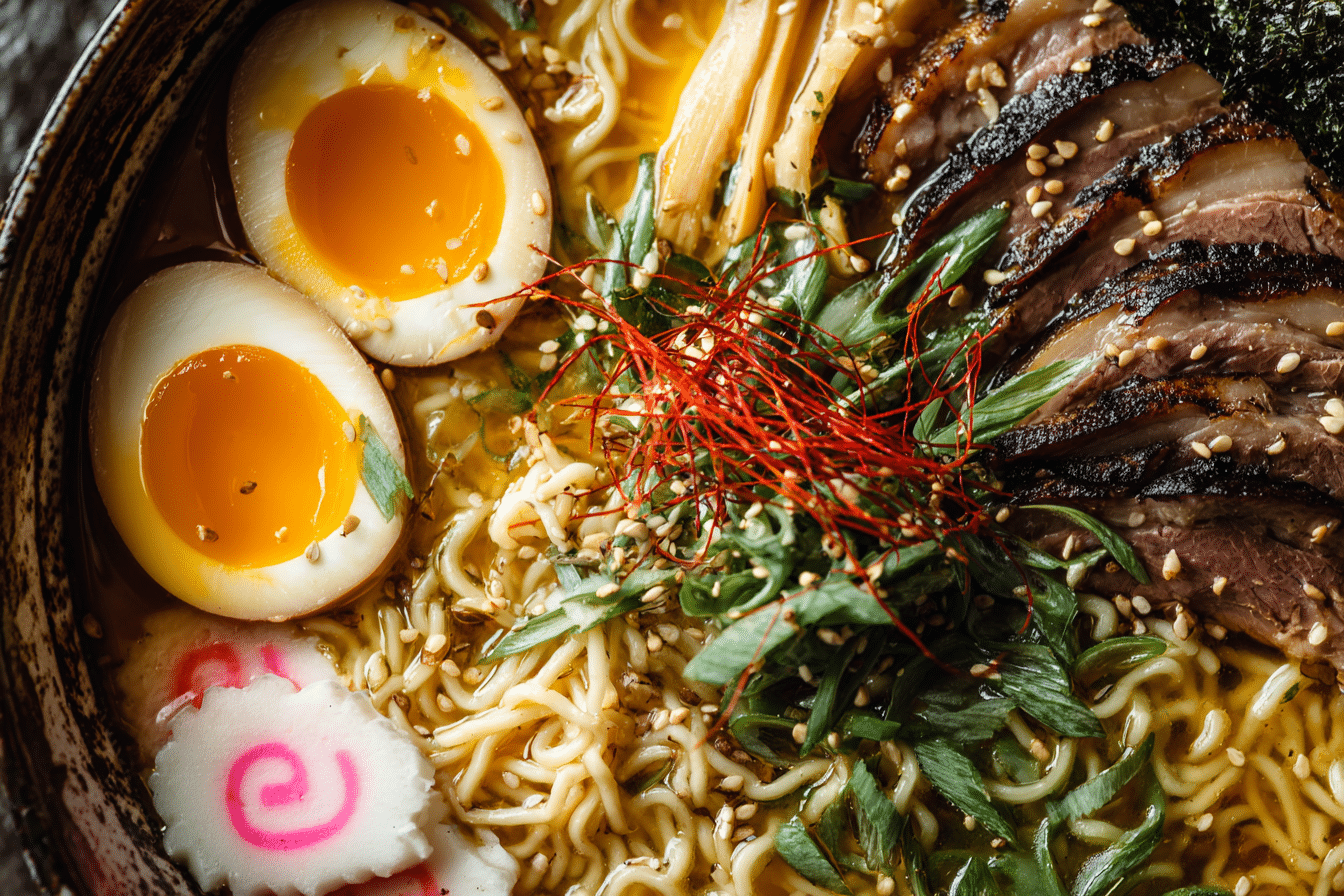
Building a great bowl of ramen involves three main components: broth, noodles, and toppings. Each one adds texture, flavor, and balance.
For the Broth:
-
Chicken or Pork Bones – The base of a rich broth. Roasting the bones first deepens the flavor. For lighter ramen, use just chicken.
-
Aromatics – Onion, garlic, ginger, and scallions form the aromatic base. Roast or sauté before simmering for maximum flavor.
-
Soy Sauce, Miso, or Salt (Shio) – These seasonings define the ramen style:
-
Shoyu: Soy sauce-based.
-
Miso: Adds fermented richness.
-
Shio: A clear, salty broth.
-
-
Dried Kombu and Shiitake Mushrooms – Add deep umami and earthiness.
-
Optional: A splash of sake or mirin for subtle sweetness and complexity.
For the Noodles:
-
Fresh Ramen Noodles – Ideally, use alkaline noodles, which are springy and yellow-hued. You can find them in the refrigerated or frozen section of Asian markets.
-
Substitute: Use Chinese egg noodles or even spaghetti cooked al dente with 1 tsp of baking soda added to the water (to mimic the alkaline effect).
For the Toppings:
-
Soft-Boiled Eggs (Ajitsuke Tamago) – Marinate in soy sauce, mirin, and water for 4–12 hours.
-
Chashu Pork or Shredded Chicken – Slow-cooked pork belly or pulled chicken makes the bowl hearty.
-
Bamboo Shoots (Menma) – Fermented and savory, found in most Asian groceries.
-
Nori Sheets – Adds a briny, ocean flavor.
-
Scallions – Freshly chopped for brightness.
-
Corn, Spinach, or Mushrooms – Optional but adds color and nutrition.
-
Toasted Sesame Oil or Chili Oil – A final drizzle brings depth and a hint of spice.
Step-by-Step Instructions
1. Make the Broth (Takes 4–6 Hours)
Roast the Bones (Optional but Recommended):
Place chicken wings, pork neck bones, or a mix in a 400°F oven for 30–40 minutes until golden.
Simmer:
Transfer roasted bones to a large pot. Add 12 cups of water, aromatics (onion, garlic, ginger, scallions), and kombu. Bring to a boil, then lower to a gentle simmer.
Skim & Cook:
Skim off impurities from the surface. Simmer uncovered for 4–6 hours, adding water as needed to maintain level.
Strain & Season:
Strain broth through a fine sieve. Season with soy sauce, miso, or salt to taste. Add a splash of mirin or sake if desired.
2. Prepare the Ramen Eggs
Bring eggs to a boil, then reduce heat and simmer for exactly 6½ minutes. Transfer to an ice bath immediately. Peel and marinate in a 1:1:2 mix of soy sauce, mirin, and water for at least 4 hours (overnight is best).
3. Cook the Noodles
Boil noodles separately in unsalted water until just tender. Drain and rinse briefly to stop cooking.
4. Assemble the Bowl
In each bowl, add a portion of noodles. Ladle hot broth over the top. Add your desired toppings: halved ramen eggs, sliced chashu, scallions, nori, and more.
5. Finish with Flavor
Drizzle with sesame oil, chili oil, or a spoonful of flavored tare (seasoned ramen concentrate) for extra depth.
Tips, Variations & Substitutions
Ramen Styles
-
Tonkotsu: Boil pork bones vigorously for 12+ hours to create a cloudy, creamy broth.
-
Miso Ramen: Stir white or red miso paste directly into the hot broth before serving.
-
Vegan Ramen: Use a mushroom and kombu base, season with miso and soy, and add tofu or tempeh.
Quick Broth Option
Use a combination of low-sodium chicken stock and dashi (Japanese soup stock), seasoned with soy sauce and mirin. Not as rich, but great for a weeknight fix.
Make-Ahead
-
Broth can be frozen in batches for up to 2 months.
-
Eggs keep in marinade in the fridge for 3–4 days.
-
Chashu pork can be made in advance and sliced cold.
Serving Ideas & Occasions
Homemade ramen is more than dinner—it’s an experience. Serve it for:
-
Casual dinner parties – Let guests build their own bowl.
-
Comfort food nights – Ideal for cozy evenings at home.
-
Meal prep – Broth and toppings can be made in advance for quick weekday meals.
Pair with cold Japanese beer, hot green tea, or a glass of sake. Serve alongside gyoza (dumplings) or edamame for a complete meal.
Nutritional & Health Notes
Ramen can be balanced and nourishing when made at home:
-
Broth: Packed with minerals and collagen from long-simmered bones.
-
Toppings: Eggs and meat provide protein, while vegetables add fiber and vitamins.
-
Noodles: Choose whole wheat or use spiralized veggies (zoodles) for a lighter version.
Control sodium by adjusting soy sauce levels and using low-sodium broth bases if needed.
FAQs
Q1: Can I make ramen in under an hour?
A1: Yes. Use store-bought chicken broth with dashi powder or miso paste for a quick broth. Add toppings and cooked noodles for a fast version.
Q2: What kind of noodles are best for ramen?
A2: Fresh alkaline noodles are ideal. Look for “ramen noodles” in the refrigerated section of Asian grocery stores. Dry noodles work too, just avoid curly instant ramen if going for a traditional texture.
Q3: How do I get a creamy broth?
A3: Boil pork bones at a high simmer for 10–12 hours, stirring occasionally. This emulsifies fat and collagen into the broth, creating tonkotsu-style creaminess.
Q4: Can I use miso and soy sauce together?
A4: Absolutely. Many ramen chefs layer flavors. Use miso for richness and soy for saltiness. Taste as you go to avoid over-seasoning.
Q5: Are ramen eggs safe to eat after a few days?
A5: Yes, if kept refrigerated in marinade, they’re safe for 3–4 days. The flavor deepens over time.
Q6: What’s tare in ramen?
A6: Tare is a concentrated seasoning mix added to ramen broth—usually soy-based, miso-based, or shio. It adds depth and allows you to adjust each bowl to taste.
Q7: Can I freeze ramen broth?
A7: Definitely. Let it cool completely, then freeze in individual portions. Thaw overnight or reheat directly on the stove.
Print
Homemade ramen with rich broth, chewy noodles, and customizable toppings like marinated eggs and roasted pork—comfort in a bowl.
- Prep Time: 10 minutes
- Cook Time: 20 minutes
- Total Time: 30minutes
- Yield: 4–6 servings 1x
Ingredients
-
2 lbs chicken or pork bones
-
1 onion, halved
-
4 garlic cloves
-
1-inch ginger, sliced
-
2 scallions
-
1 piece kombu (dried seaweed)
-
2 dried shiitake mushrooms
-
12 cups water
-
¼ cup soy sauce or 2 tbsp miso
-
1 tbsp mirin (optional)
For the Noodles & Toppings:
-
Fresh ramen noodles (or substitute)
-
2–4 soft-boiled eggs, halved
-
Sliced chashu pork or shredded chicken
-
Chopped scallions
-
Nori sheets
-
Toasted sesame oil or chili oil
Instructions
-
Roast bones at 400°F for 30–40 minutes (optional).
-
Simmer bones, aromatics, and water for 4–6 hours. Skim foam as needed.
-
Strain and season broth to taste with soy sauce, miso, or salt.
-
Cook noodles separately and drain.
-
Assemble bowls: add noodles, ladle hot broth, and top with eggs, meat, and veggies.
-
Drizzle with sesame oil or chili oil.