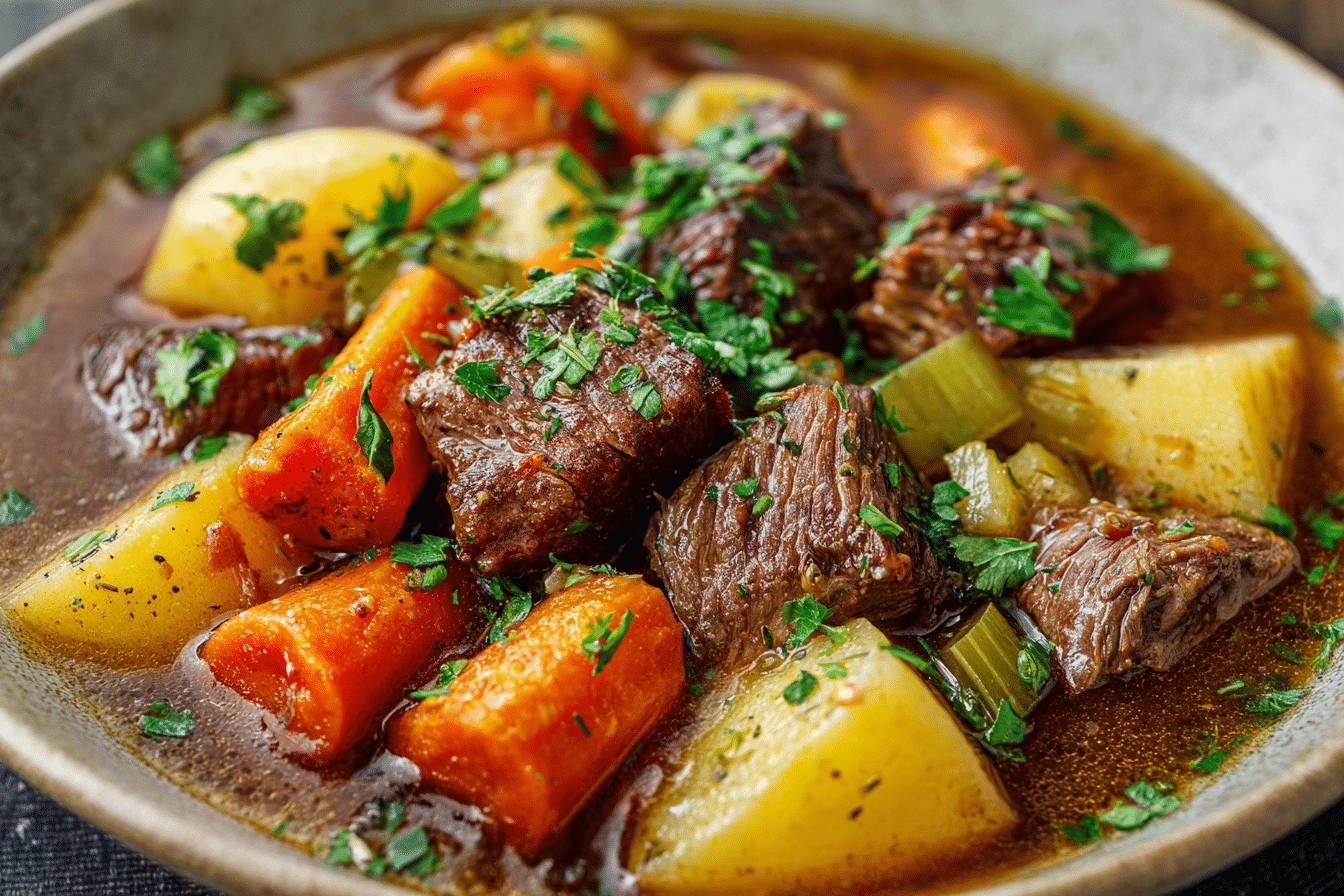
There’s something deeply comforting about a bowl of hearty beef stew. Rooted in generations of home cooking from cultures around the world — from French boeuf bourguignon to Irish stew — this rustic dish brings warmth, richness, and tenderness with every spoonful.
Made with melt-in-your-mouth chunks of beef, slow-simmered vegetables, and a savory, aromatic broth, beef stew is a timeless favorite for cold evenings, lazy Sundays, or when you simply crave something soulful.
This version of beef stew is designed for deep flavor, balanced texture, and slow-cooked satisfaction. Whether served over mashed potatoes, with crusty bread, or simply on its own, it’s a meal that fills the house with a mouthwatering aroma — and fills bellies with lasting comfort.
Ingredients Overview
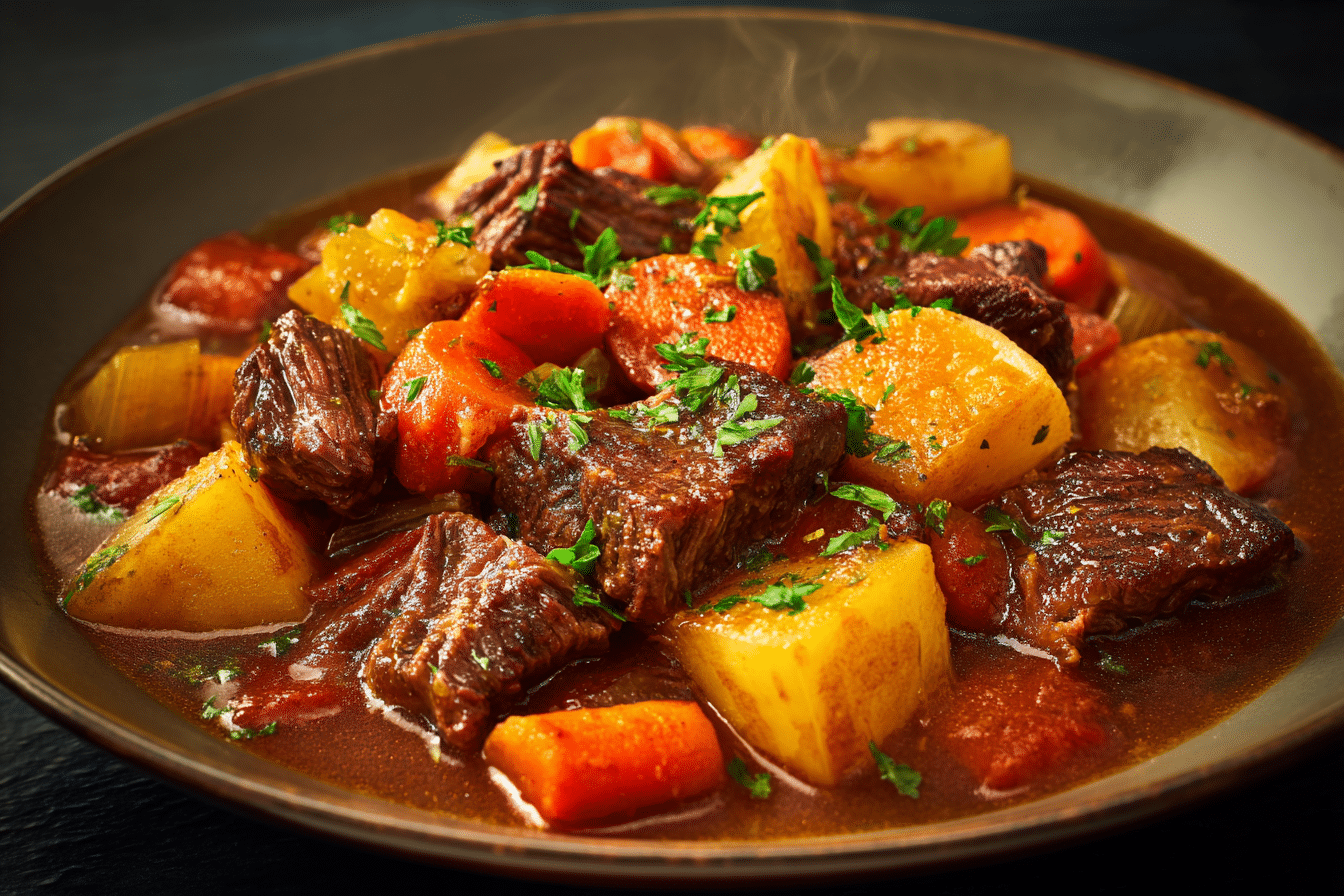
The success of beef stew begins with quality ingredients. Here’s a breakdown of the components that make this stew so rich and flavorful:
Beef Chuck
Beef chuck is the ideal cut for stew — it’s marbled with just enough fat to turn juicy and tender during long, slow cooking. Unlike lean cuts, chuck doesn’t dry out or toughen. If unavailable, stewing beef or brisket are suitable alternatives.
Tip: Cut into uniform 1½-inch cubes for even cooking and texture.
Onions & Garlic
A foundation of savory flavor, onions lend sweetness as they soften, while garlic adds depth and aroma. Yellow onions are most common, but white or even shallots work well.
Carrots & Celery
These classic aromatics give stew its base body and color. Carrots bring subtle sweetness and texture, while celery adds an earthy undertone. Dice them evenly for a uniform cook.
Potatoes
Waxy varieties like Yukon Gold or red potatoes hold their shape best. They absorb flavor while remaining satisfyingly firm. Russets can be used but may break down and thicken the stew more.
Tomato Paste & Worcestershire Sauce
These two ingredients create umami depth. Tomato paste offers concentrated tang and body, while Worcestershire contributes a subtle savory punch.
Beef Broth
Use low-sodium beef broth for full control over salt levels. For extra richness, mix in a cup of red wine or bone broth.
Herbs & Seasoning
Bay leaves, thyme, and parsley provide traditional herbaceous notes. Fresh thyme is especially aromatic, but dried can be used in smaller quantity.
Flour or Cornstarch (Optional)
For a slightly thicker stew, dredge the beef in flour before searing or add a cornstarch slurry near the end. This also helps build a glossy, velvety texture.
Olive Oil or Butter
Used for searing the meat and sautéing the vegetables. Olive oil adds a fruity richness; butter gives a touch of indulgence.
Step-by-Step Instructions
1. Sear the Beef
Start by patting the beef chunks dry with paper towels. This helps them brown instead of steam. Season with salt and pepper, then dredge lightly in flour if you want a thicker stew.
In a heavy-bottomed pot or Dutch oven, heat oil over medium-high heat. Sear the beef in batches without crowding the pan, getting a deep brown crust on all sides. Set aside.
2. Sauté the Aromatics
In the same pot, reduce heat to medium. Add a bit more oil if needed and sauté chopped onions until translucent, about 5–6 minutes. Stir in garlic, carrots, and celery. Cook until fragrant and slightly tender, another 5 minutes.
Scrape up any browned bits from the bottom — they’re flavor gold.
3. Build the Flavor
Stir in tomato paste and cook for 2 minutes to deepen its flavor. Add a splash of wine or broth to deglaze, stirring to loosen anything stuck to the pot.
Return the beef to the pot. Pour in remaining broth, just enough to cover the ingredients. Add Worcestershire, bay leaves, and thyme. Bring to a simmer.
4. Slow Simmer
Cover and simmer on low for 1½ to 2 hours, or until the beef is fork-tender. Stir occasionally, checking the liquid level and skimming any excess fat.
For even richer flavor, cook uncovered for the last 30 minutes to reduce and concentrate the broth.
5. Add Potatoes
Add diced potatoes in the final 30–40 minutes of simmering. They should be tender but not mushy.
Taste and adjust salt, pepper, or acidity with a splash of vinegar if needed.
6. Finish and Serve
Remove bay leaves and thyme stems. Stir in chopped parsley for a fresh lift. Ladle into bowls and serve piping hot.
Tips, Variations & Substitutions
Pro Cooking Tips
-
Sear properly: Don’t rush the browning step. It develops the stew’s rich base flavor.
-
Low and slow: A gentle simmer over time ensures tender meat and deep taste.
-
Day-after magic: Beef stew is often even tastier the next day as flavors meld.
Variations
-
Red Wine Stew: Add a cup of dry red wine (like Cabernet or Pinot Noir) after sautéing vegetables for a more robust, French-style flavor.
-
Guinness Irish Stew: Replace part of the broth with stout for malty richness.
-
Spiced Version: Add smoked paprika, cumin, or even a pinch of cinnamon for Moroccan influence.
Substitutions
-
Gluten-Free: Skip flour or use cornstarch to thicken at the end.
-
Low-Carb: Omit potatoes and use turnips or cauliflower instead.
-
Vegetarian: Swap beef with mushrooms and chickpeas, and use vegetable broth.
Serving Ideas & Occasions
Beef stew is ideal for family dinners, winter gatherings, or cozy weekend cooking.
-
Serve with: Buttery mashed potatoes, creamy polenta, or a crusty baguette.
-
Add freshness: Pair with a simple green salad or steamed green beans.
-
Drinks: Red wine (Cabernet or Zinfandel) or dark beer balances the stew’s depth.
-
Occasions: It’s a go-to for holiday leftovers, freezer-friendly meal prep, or a Sunday supper tradition.
The scent of stew simmering on the stove is a nostalgic treat that brings comfort and conversation to the table.
Nutritional & Health Notes
Beef stew offers a balanced mix of protein, fiber, and complex carbohydrates.
-
Protein: Beef provides high-quality protein, essential for muscle repair and energy.
-
Vitamins: Carrots and potatoes offer vitamin A, C, and potassium.
-
Fiber: A medley of vegetables helps support digestion and satiety.
-
Adjustments: To reduce calories or saturated fat, use leaner beef cuts and minimal oil. Adding extra vegetables can boost volume without excess calories.
For those following lower-sodium or anti-inflammatory diets, opt for low-sodium broth and fresh herbs rather than seasoning packets or bouillon cubes.
FAQs
Q1: What is the best cut of beef for stew?
A1: Chuck roast is the most commonly recommended cut for stew. It’s affordable, well-marbled, and becomes tender with slow cooking. Avoid lean cuts like sirloin, which can become tough.
Q2: How can I thicken beef stew without flour?
A2: You can use cornstarch, arrowroot, or reduce the liquid by simmering uncovered. Mashed potatoes or puréed cooked vegetables also add natural thickness.
Q3: Can beef stew be made in a slow cooker?
A3: Yes! After searing the beef and sautéing vegetables, transfer everything to a slow cooker. Cook on low for 7–8 hours or high for 4–5 hours. Add potatoes halfway through to prevent overcooking.
Q4: How do I store and reheat leftovers?
A4: Cool stew completely before transferring to airtight containers. It will keep in the fridge for 4 days or freeze for up to 3 months. Reheat gently on the stove or in the microwave with a splash of broth.
Q5: Can I make beef stew without wine?
A5: Absolutely. Wine adds depth, but you can substitute with extra beef broth, a splash of balsamic vinegar, or even unsweetened cranberry juice for acidity.
Q6: Why is my beef stew meat tough?
A6: It likely hasn’t cooked long enough. Stewing beef needs time to break down connective tissue. Simmer gently for at least 90 minutes and avoid boiling, which can toughen meat.
Q7: What vegetables go well in beef stew?
A7: Carrots, potatoes, celery, onions, parsnips, and mushrooms are all excellent. For added color and nutrients, consider green beans, peas, or kale added near the end of cooking.
Print
A comforting and flavorful homemade beef stew made with tender chunks of beef, root vegetables, and a rich, savory broth — perfect for cozy dinners or make-ahead meals.
- Prep Time: 10 minutes
- Cook Time: 20 minutes
- Total Time: 30minutes
- Yield: 4–6 servings 1x
Ingredients
-
2 lbs beef chuck, cut into 1½-inch cubes
-
2 tbsp olive oil
-
Salt and black pepper
-
2 tbsp flour (optional, for dredging)
-
1 large yellow onion, chopped
-
3 cloves garlic, minced
-
3 carrots, peeled and chopped
-
2 celery stalks, chopped
-
2 tbsp tomato paste
-
4 cups low-sodium beef broth
-
1 tbsp Worcestershire sauce
-
1½ lbs Yukon Gold potatoes, diced
-
2 bay leaves
-
1 tsp fresh thyme (or ½ tsp dried)
-
Fresh parsley, chopped (for garnish)
Instructions
-
Pat beef dry, season with salt and pepper, and dredge in flour if desired.
-
Heat oil in a Dutch oven. Brown beef in batches; remove and set aside.
-
In same pot, sauté onions until soft. Add garlic, carrots, and celery; cook 5 minutes.
-
Stir in tomato paste. Deglaze with broth or wine.
-
Return beef to pot. Add remaining broth, Worcestershire, herbs, and bay leaves.
-
Bring to a simmer. Cover and cook on low for 1½ to 2 hours, stirring occasionally.
-
Add potatoes and cook another 30–40 minutes until tender.
-
Remove bay leaves, adjust seasoning, and garnish with parsley before serving.