
Homemade ramen is more than just a bowl of noodles — it’s a deeply satisfying dish layered with rich broth, tender proteins, fresh vegetables, and a soft-boiled egg, all nestled together in perfect harmony.
Originating in Japan but beloved worldwide, ramen is a cultural icon known for its heartwarming appeal and crave-worthy flavor. From the savory depth of miso or soy-based broths to the silky bite of handmade noodles, every element of this dish is customizable and comforting.
Making ramen from scratch may seem intimidating, but with the right ingredients and a little patience, it transforms into an enjoyable, even meditative, cooking experience. This recipe walks you through a realistic, home-friendly version of ramen that captures all the magic of your favorite bowl—right in your kitchen.
Ingredients Overview
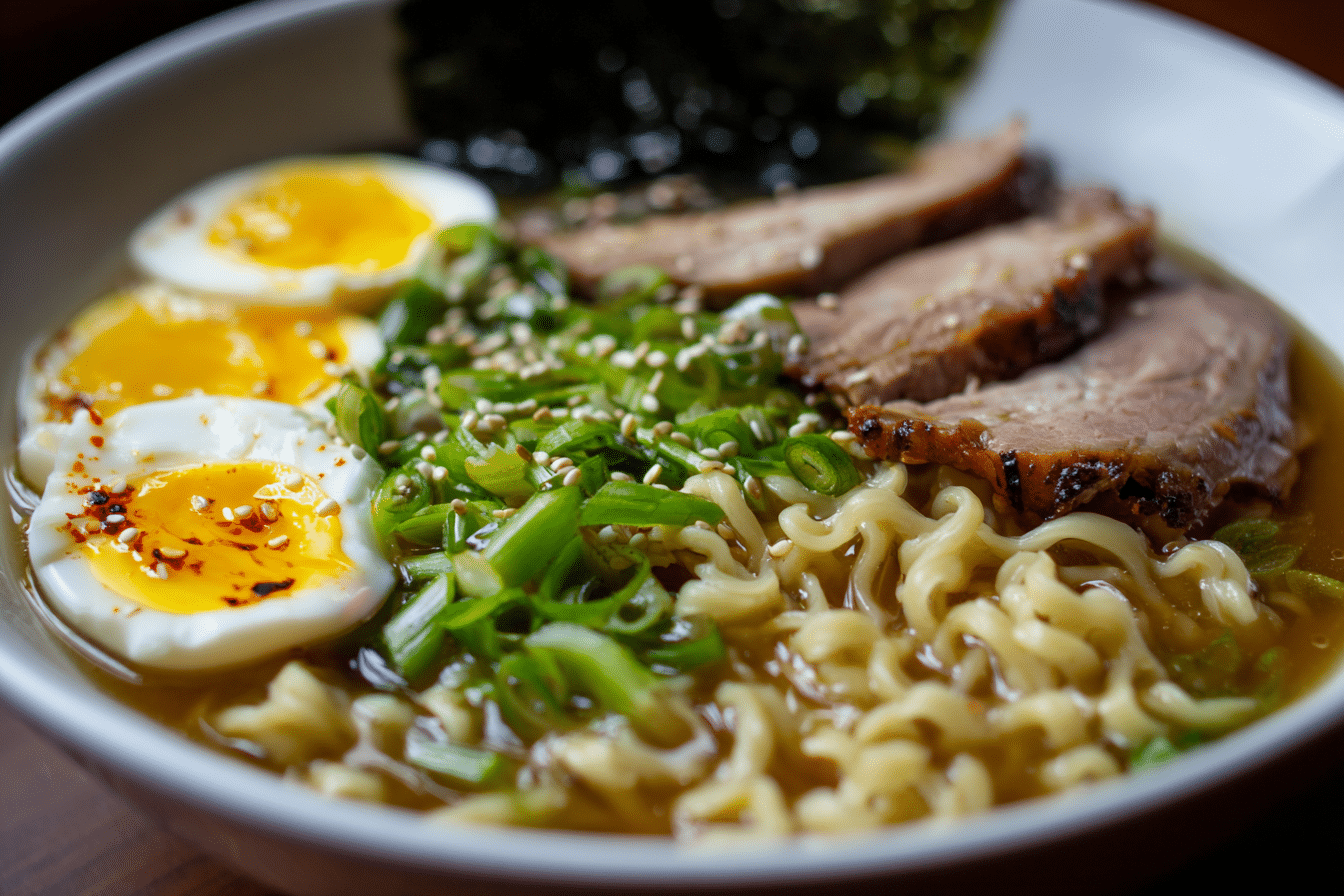
While restaurant ramen can take days to perfect, this homemade version strikes the balance between authenticity and simplicity. Here’s what you’ll need and why each ingredient matters:
1. Broth (The Soul of Ramen)
-
Chicken broth (low-sodium): A savory, clean base that holds flavor well.
-
Dashi or kombu broth: Traditional Japanese stock made from kelp and/or bonito flakes. Adds deep umami.
-
Soy sauce & mirin: For seasoning with complexity and slight sweetness.
-
Miso paste (optional): Adds richness, especially in miso ramen.
-
Garlic, ginger, green onions: Aromatics that infuse warmth and fragrance.
Tip: For vegetarians, swap chicken broth for mushroom or vegetable broth and skip bonito flakes in dashi.
2. Noodles
-
Fresh ramen noodles: Springy, yellow, and chewy — essential for texture.
-
If unavailable, frozen udon or even angel hair pasta (in a pinch) can be used.
-
Avoid instant noodles — they’ll fall apart in rich broth.
3. Toppings
-
Soft-boiled eggs (marinated or plain): Creamy yolk adds richness.
-
Chashu pork or shredded chicken: Tender, flavorful protein.
-
Nori sheets: Brings a touch of the sea.
-
Bean sprouts, corn, bok choy, mushrooms: Provide freshness and crunch.
4. Flavor Bombs (Optional but Game-Changing)
-
Chili oil or rayu
-
Toasted sesame seeds
-
Butter (a Hokkaido-style touch)
-
Black garlic oil
By using accessible ingredients and layering flavors thoughtfully, you can build a ramen bowl that’s complex, customizable, and restaurant-worthy.
Step-by-Step Instructions
Making homemade ramen involves three main components: the broth, the toppings, and the noodles. Here’s how to bring them all together seamlessly.
1. Prepare the Broth
In a large pot:
-
Add 6 cups of chicken broth and 2 cups of dashi or water with a piece of kombu (kelp).
-
Bring to a simmer, then add 1 tablespoon soy sauce, 1 tablespoon mirin, and a tablespoon of miso paste (if using).
-
Add 2 crushed garlic cloves, a thumb of sliced ginger, and 2 chopped green onions.
-
Simmer gently for 25–30 minutes to allow the flavors to meld.
Chef Tip: Do not boil vigorously — a gentle simmer keeps the broth clear and clean in flavor.
2. Make the Soft-Boiled Eggs
-
Bring a small pot of water to a boil.
-
Gently lower 2–4 eggs in and cook for 6½ minutes.
-
Transfer immediately to ice water for 5 minutes, then peel.
Optional: Marinate in soy sauce, mirin, and a splash of water for a few hours for “ajitsuke tamago.”
3. Cook the Protein
-
For chashu-style pork, sear thinly sliced pork belly and simmer in a soy-mirin-sugar mixture.
-
For a quicker version, shredded rotisserie chicken works beautifully.
4. Boil the Noodles
-
Cook fresh ramen noodles according to package instructions (usually 2–3 minutes).
-
Drain and rinse lightly to remove starch.
Tip: Do this just before serving — noodles absorb broth and can become soggy if left too long.
5. Assemble the Bowls
-
Divide cooked noodles between bowls.
-
Ladle hot broth over noodles.
-
Top with your protein, halved soft-boiled egg, sautéed mushrooms, a handful of bean sprouts, a few leaves of blanched bok choy, and a square of nori.
-
Drizzle chili oil or sprinkle sesame seeds if desired.
The aroma of soy, garlic, and rich broth wafting up from a hot bowl of ramen is pure comfort on a chilly day.
Tips, Variations & Substitutions
Cooking Tips:
-
Always salt your broth to taste after simmering.
-
Add a spoonful of miso just before serving — cooking it too long can dull the flavor.
-
Use a strainer or cheesecloth if your broth has sediment for a cleaner finish.
Regional Variations:
-
Shoyu Ramen: Soy sauce–based; clear, slightly sweet broth.
-
Miso Ramen: Rich and hearty, often with corn and butter.
-
Tonkotsu Ramen: Pork bone broth, creamy and rich (requires long boiling).
-
Shio Ramen: Salt-based, light and clear broth.
Dietary Substitutions:
-
Vegan: Use vegetable broth, miso, tofu cubes, and omit eggs.
-
Gluten-Free: Choose gluten-free tamari instead of soy sauce and use rice noodles or GF ramen.
-
Low-carb: Try shirataki noodles and extra veggies.
Serving Ideas & Occasions
Homemade ramen is perfect for cozy weeknight dinners, lazy Sundays, or casual gatherings with friends. It’s also a creative “build-your-own” bar for parties — just lay out different toppings and let everyone customize their bowl.
Serve with:
-
Steamed edamame with sea salt
-
Japanese pickles (tsukemono)
-
Green tea or cold sake
-
Gyoza (Japanese dumplings) for a complete meal
With its steamy, savory broth and mix of textures, ramen is satisfying and soul-warming — a true comfort dish for colder months or rainy nights.
Nutritional & Health Notes
Ramen can be surprisingly balanced when made at home. The broth delivers hydration and minerals, the noodles provide energy, and the toppings offer protein and fiber.
To keep it healthy:
-
Use less sodium in your broth or dilute with water.
-
Add extra vegetables like spinach, carrots, or mushrooms.
-
Choose lean proteins or tofu for a lighter option.
A single bowl can offer 20–30 grams of protein, plenty of antioxidants from veggies, and healthy fats from eggs and sesame.
Portion control matters: keep to one bowl per serving and resist overloading with noodles.
FAQs
Q1: Can I make ramen broth in advance?
A1: Yes! Ramen broth can be made 2–3 days ahead and stored in the fridge. The flavors deepen over time, and it reheats beautifully. Freeze for up to 1 month in airtight containers.
Q2: What type of noodles are best for homemade ramen?
A2: Fresh ramen noodles are ideal due to their chewy texture and flavor. If unavailable, you can use frozen ramen or substitute with thin egg noodles. Avoid instant noodles as they tend to be too soft.
Q3: How do I marinate ramen eggs?
A3: Combine equal parts soy sauce and mirin with a splash of water. Let peeled, soft-boiled eggs soak for 2–4 hours in the fridge. The longer they sit, the deeper the flavor.
Q4: Is ramen always made with pork?
A4: No — ramen is incredibly versatile. While traditional tonkotsu ramen uses pork, you can use chicken, tofu, mushrooms, or even shrimp. The key is in the seasoning and broth base.
Q5: Can I use miso and soy sauce together?
A5: Absolutely. They complement each other beautifully. Soy sauce adds saltiness and depth, while miso brings body and umami. Just adjust salt levels carefully.
Q6: How do I keep noodles from getting soggy?
A6: Cook noodles separately and rinse lightly. Only add them to the broth when you’re ready to serve. This keeps them firm and prevents overcooking.
Q7: What vegetables go well in ramen?
A7: Classic options include bok choy, bean sprouts, mushrooms, corn, spinach, and green onions. You can also use shredded carrots, kale, or snow peas for added color and crunch.
Print
A comforting, deeply savory bowl of homemade ramen with rich broth, chewy noodles, soft-boiled eggs, and customizable toppings — perfect for cozy meals at home.
- Prep Time: 10 minutes
- Cook Time: 20 minutes
- Total Time: 30minutes
- Yield: 4–6 servings 1x
Ingredients
-
6 cups chicken broth (low sodium)
-
2 cups dashi or water with 1 kombu sheet
-
1 tbsp soy sauce
-
1 tbsp mirin
-
1 tbsp miso paste (optional)
-
2 garlic cloves, crushed
-
1-inch ginger, sliced
-
2 green onions, chopped
-
4 fresh ramen noodle bundles
-
2–4 eggs
-
1 cup cooked pork or chicken
-
1 cup bok choy or spinach
-
½ cup mushrooms, sliced
-
½ cup bean sprouts
-
Nori sheets, sesame seeds, chili oil (for garnish)
Instructions
-
Simmer chicken broth and dashi with soy sauce, mirin, miso, garlic, ginger, and green onions for 25–30 minutes.
-
Soft-boil eggs for 6½ minutes, cool in ice bath, peel, and marinate if desired.
-
Cook noodles according to package, drain, and set aside.
-
Prepare toppings — slice pork, sauté mushrooms, blanch greens.
-
Assemble bowls: place noodles, pour in broth, add protein, eggs, vegetables, and garnishes.