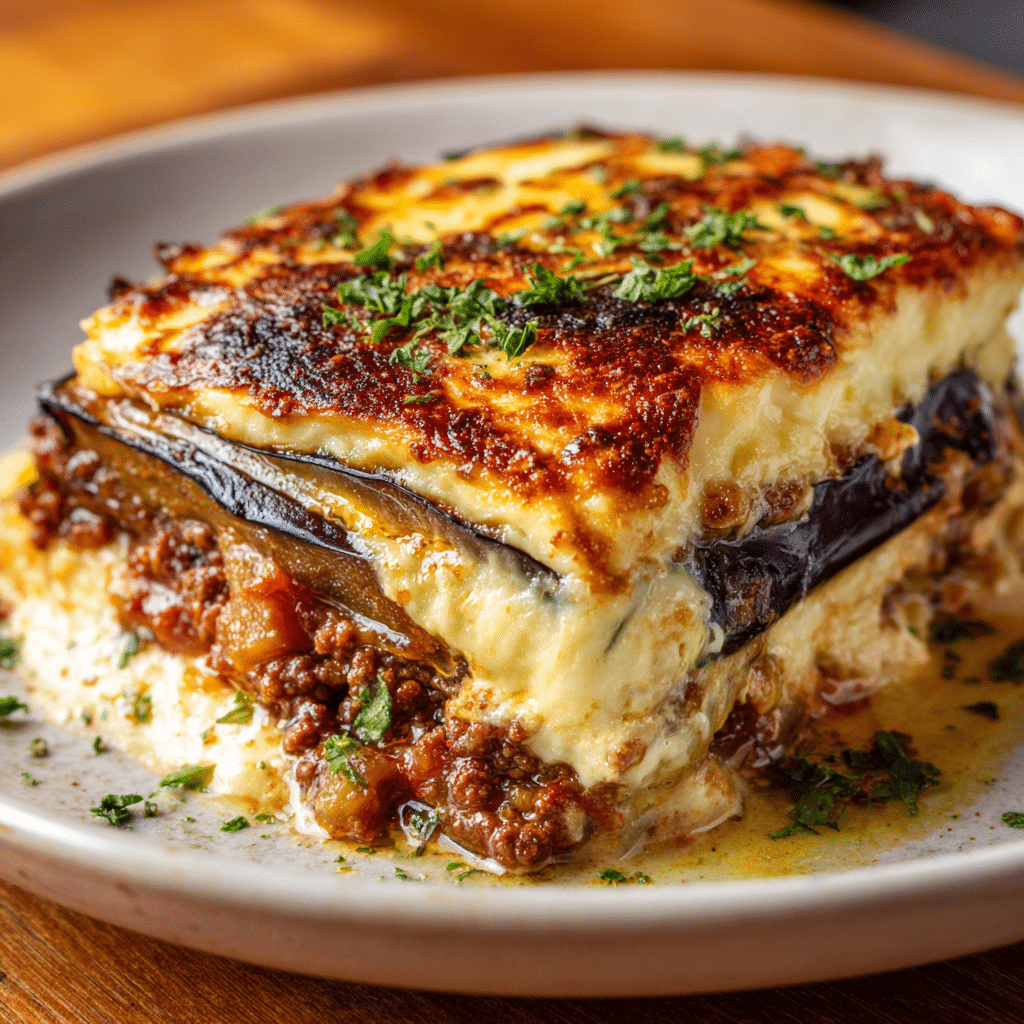
Greek Moussaka is the ultimate Mediterranean comfort food — a rich, savory baked dish that’s layered with tender eggplant, hearty ground meat, and a luscious béchamel sauce. Often referred to as Greece’s answer to lasagna, this iconic casserole has deep roots in Balkan and Middle Eastern cuisine, with the Greek version being the most celebrated for its luxurious texture and depth of flavor.
Traditionally served during Sunday dinners and festive gatherings, Moussaka is a labor of love, but well worth the effort. The blend of warming spices, creamy topping, and velvety roasted vegetables creates an unforgettable dining experience. Each forkful is a delightful contrast of textures — from soft, roasted eggplant to the robust, cinnamon-scented meat sauce, all crowned with a golden, cheesy béchamel that bubbles beautifully in the oven.
This outrageously delicious Greek Moussaka recipe honors its authentic roots while offering practical tips to master it in your home kitchen.
Ingredients Overview
Every component in Moussaka plays a crucial role in building its layered complexity. Here’s a closer look at what you’ll need — and how to choose wisely.
Eggplant
-
Type: Globe eggplants are traditional, offering a meaty texture when sliced and roasted.
-
Preparation Tip: Slice into ½-inch rounds and salt them generously. Let them sit for 30 minutes to draw out bitterness, then pat dry.
-
Alternatives: Zucchini can be used for a lighter or lower-carb version, but won’t deliver the same richness.
Ground Meat
-
Traditional: Ground lamb or beef. Lamb offers a more authentic and earthy flavor, while beef is more accessible.
-
Flavor Note: The meat is simmered with onion, garlic, tomato paste, and red wine, creating a robust, slightly sweet meat sauce.
-
Vegan Option: Lentils or mushrooms can replace meat for a plant-based twist.
Tomatoes & Red Wine
-
Tomato Paste: Adds depth and umami to the sauce.
-
Red Wine: Choose a dry red — it deglazes the pan and adds rich, fruity undertones.
-
Tip: Let the wine cook off completely to avoid any harshness.
Spices
-
Cinnamon & Allspice: Key to the dish’s distinctive flavor profile — warm and slightly sweet.
-
Bay Leaf: Adds subtle fragrance as the meat sauce simmers.
Béchamel Sauce
-
Ingredients: Butter, flour, milk, nutmeg, eggs, and grated cheese.
-
Texture: Creamy, smooth, and thick enough to form a satisfying top layer.
-
Cheese Choice: Kefalotyri or Parmesan — for a salty, nutty finish.
Cheese
-
For Topping: A generous layer of grated cheese helps form that golden crust.
-
Greek Options: Graviera or Kefalotyri. If unavailable, use a mix of Parmesan and Pecorino Romano.
Potatoes (Optional)
-
Base Layer: Thinly sliced potatoes can be added for a heartier base layer.
-
Tip: Parboil or pan-fry before assembling to ensure they cook through.
Step-by-Step Instructions
Moussaka involves several components — but each step is manageable with a little planning. Here’s how to build this classic dish:
1. Prep the Eggplant
-
Slice eggplants into ½-inch rounds. Salt generously and set in a colander for 30–45 minutes. This step removes bitterness and prevents sogginess.
-
Rinse and pat dry thoroughly.
-
Brush with olive oil and roast at 425°F (220°C) for 20–25 minutes until golden and soft.
2. Make the Meat Sauce
-
In a large sauté pan, heat olive oil and cook chopped onion until translucent.
-
Add minced garlic and ground lamb or beef. Cook until browned, breaking up the meat.
-
Stir in tomato paste, cinnamon, allspice, salt, and pepper.
-
Deglaze with red wine and let simmer until most of the liquid evaporates.
-
Add canned crushed tomatoes and a bay leaf. Simmer for 20–30 minutes until thickened.
-
Remove bay leaf and adjust seasoning.
3. Prepare the Béchamel
-
In a saucepan, melt butter over medium heat. Whisk in flour and cook for 1–2 minutes to eliminate the raw flavor.
-
Gradually add warm milk, whisking constantly until smooth and thick.
-
Remove from heat. Stir in nutmeg, salt, and grated cheese.
-
Once slightly cooled, whisk in beaten eggs for a silky finish.
4. Assemble the Moussaka
-
Optional: Add a layer of parboiled potato slices at the base of a greased baking dish.
-
Arrange a layer of roasted eggplant slices.
-
Spread the meat sauce evenly on top.
-
Add another layer of eggplant, followed by the rest of the sauce.
-
Pour the béchamel over everything, smoothing with a spatula.
-
Sprinkle additional cheese on top.
5. Bake
-
Bake in a preheated oven at 375°F (190°C) for 45–50 minutes until the top is golden and bubbling.
-
Let it rest for at least 30 minutes before slicing — this helps the layers set.
Tips, Variations & Substitutions
-
Time-Saver Tip: Roast the eggplant and cook the meat sauce a day ahead.
-
Gluten-Free: Use gluten-free flour in the béchamel and ensure all other ingredients are certified gluten-free.
-
Low-Carb Option: Skip the potatoes and use zucchini instead of eggplant for fewer carbs.
-
Vegan Version: Use olive oil-based béchamel (made with almond or oat milk), and replace meat with lentils or crumbled tempeh.
-
Spice Boost: Add a pinch of clove or nutmeg to the meat sauce for added warmth.
Regional Variations
-
Turkish Musakka: Typically sautéed eggplant and meat layered loosely, not baked with béchamel.
-
Middle Eastern: Often served cold, made with chickpeas and tahini instead of béchamel.
Serving Ideas & Occasions
Moussaka is hearty enough to be the star of any dinner. Its layered richness pairs beautifully with a crisp green salad dressed with lemon and oregano, or a side of tzatziki for a cooling contrast.
Ideal Pairings
-
Greek village salad (Horiatiki)
-
Warm pita or crusty sourdough
-
Light red wine like Agiorgitiko or a medium-bodied Merlot
When to Serve
-
Sunday Family Dinners: A showstopper main dish.
-
Holiday Feasts: Perfect for Greek Easter or Christmas gatherings.
-
Meal Prep: Moussaka holds up beautifully — in fact, it tastes even better the next day.
Nutritional & Health Notes
While Moussaka is rich and indulgent, it also delivers a good balance of macronutrients. Each serving provides:
-
Protein: From the ground meat and eggs.
-
Healthy Fats: Olive oil and cheese provide satiating fats.
-
Fiber: Eggplant adds dietary fiber for digestion.
-
Calcium & Iron: Béchamel and meat sauce provide essential minerals.
Portion Control Tips
Moussaka is dense, so a moderate square served with a fresh salad makes a satisfying, complete meal. If you’re watching calories, opt for low-fat milk in the béchamel or reduce the cheese topping slightly.
FAQs
Q1: Can I make Moussaka ahead of time?
A1: Absolutely. Moussaka is an excellent make-ahead dish. Assemble it fully, cover tightly, and refrigerate for up to 24 hours. When ready to bake, bring it to room temperature and bake as directed. It also freezes beautifully for up to 3 months.
Q2: How do I keep my béchamel from curdling?
A2: Allow the milk to warm slightly before adding, and whisk constantly while pouring. Be sure to cool the sauce slightly before adding the eggs, or temper the eggs first to prevent scrambling.
Q3: What’s the best meat to use in Moussaka?
A3: Ground lamb is traditional and offers a rich, gamey flavor. Ground beef is more common and equally delicious. A blend of the two works wonderfully for a balanced flavor.
Q4: Can I make Moussaka without eggplant?
A4: Yes. You can substitute zucchini or even thin slices of roasted sweet potato. While it won’t be traditional, it still creates a flavorful dish.
Q5: How do I reheat leftovers?
A5: Reheat in the oven at 350°F (175°C) for 20–25 minutes. For single portions, microwave on medium power to avoid drying out. Add a splash of broth or water before heating if needed.
Q6: What’s the difference between Greek Moussaka and Italian lasagna?
A6: Moussaka uses eggplant and béchamel, while lasagna layers pasta with ricotta, mozzarella, and meat sauce. The flavor profile is also spiced differently — Moussaka includes cinnamon and allspice.
Q7: Is Moussaka healthy?
A7: Moussaka can be a wholesome meal when made with lean meat, moderate cheese, and healthy fats. It’s high in protein, rich in flavor, and very filling — just watch portion sizes and balance with fresh vegetables.